
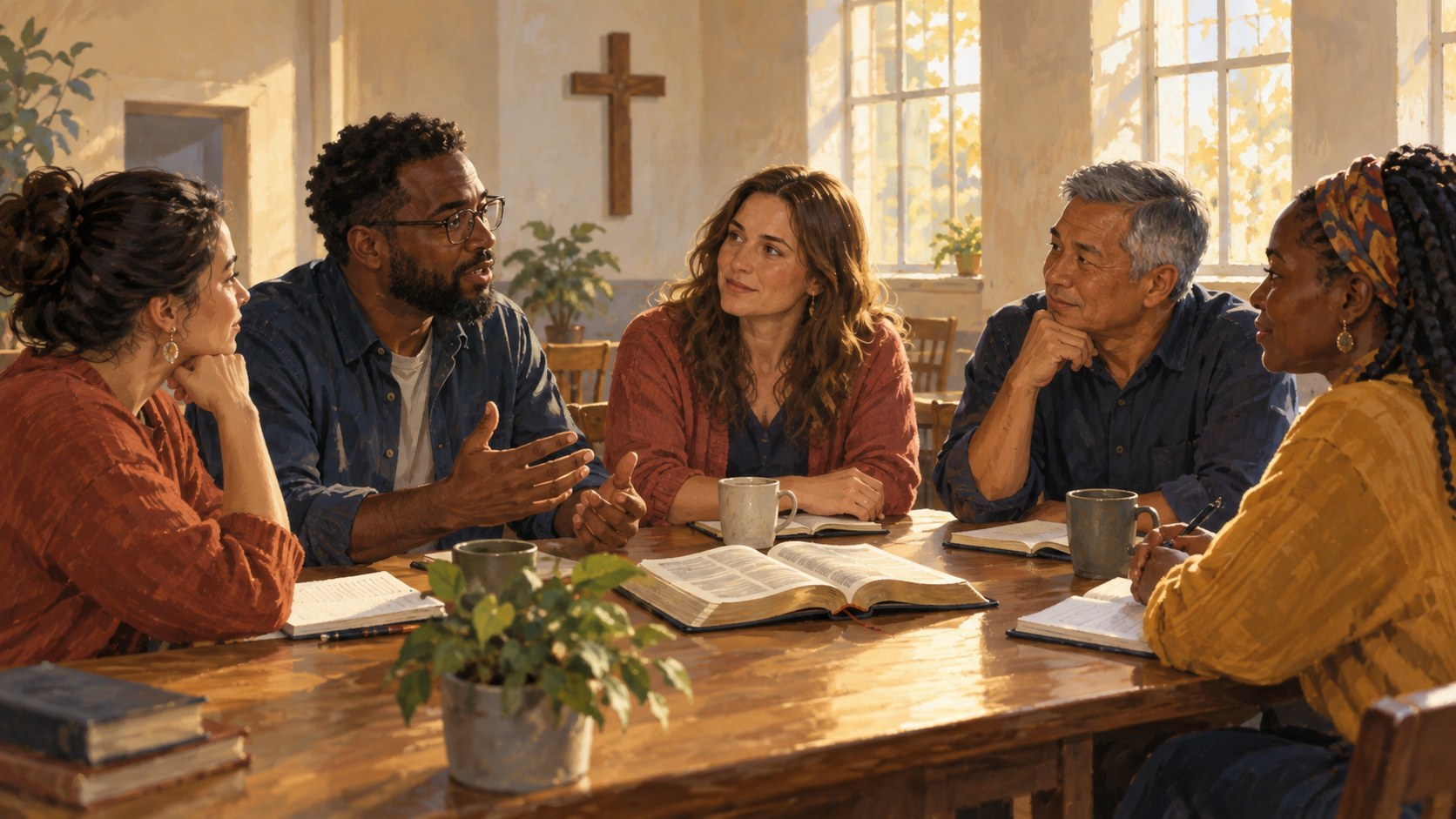
I have been thinking about how much my Pentecostal faith shapes the way I understand leadership. It shapes what I expect God to do, how I recognize potential in people, and what I believe can happen when a community makes room for the Holy Spirit.
Those convictions deserve some attention. If I believe the Spirit gives gifts, speaks through people, and calls us into work bigger than ourselves, that belief should show up in the way I lead a church, conduct a meeting, or help someone take their next step.
That is what I mean by “leading in tongues.”
For readers unfamiliar with the language, speaking in tongues refers to Spirit-enabled speech or prayer that is central to Pentecostal experience. In Acts 2, the Holy Spirit fills the gathered believers, and people from different places hear them speaking in their own languages. Pentecostal Christians look to that account as foundational to their understanding of the Spirit’s work.
As I study theology and leadership, I keep coming back to that picture: people receiving something from God and sharing it in a way that reaches beyond themselves. I see a pattern there that has something to teach me about leading.
Receive the gift, then take responsibility for it
I understand leadership as a gift I am responsible to steward. Whatever ability I have to gather people, recognize a need, or help an organization move forward comes with an obligation to use it for the good of others.
That is a humbling place to begin. A title can tell people what position I hold. It takes a life of faithfulness to show them what I am doing with it.
There is also something encouraging about receiving leadership as a gift. I can depend on God while I learn. I can ask for wisdom when I do not know what to do. I can listen to people whose experience exposes something I have missed.
Prayer and preparation belong together. So do spiritual dependence and practical skills. If I am responsible for people, I need to learn how to communicate, make decisions, handle resources, and receive correction. The people affected by my leadership deserve that effort.
The believers in Acts 2 waited, received, and then responded. I see a rhythm there worth practicing. There are times to stop and listen. There are times to welcome what God is doing. And there are times to act on what we have received.
I want to be a leader who can do all three.
Remember that we stepped into a story already underway
Hebrews 12 describes a great cloud of witnesses. I find that image helpful because leadership can make us feel as though everything depends on what we do next. Scripture reminds me that people have been walking by faith long before I arrived.
Pentecostal faith carries stories of prayer, courage, sacrifice, and unexpected encounters with God. Those stories shape what a community believes is possible. When we hear how someone trusted God through a difficult season, it can give us courage for our own.
I think that is part of how leadership is passed along. We learn from teaching, but we also learn by watching people. We notice how they pray, how they treat someone who cannot offer them anything, and how they respond when their plans fall apart. Their lives give substance to the words they use.
That makes me responsible for the story my leadership is telling. People are learning something about faith from how I behave when I am tired, disappointed, or challenged.
I also want to learn honestly from my tradition. Our heritage includes failures and exclusions that need to be faced. Loving a tradition gives me reason to examine it carefully, receive its wisdom, and take responsibility for what needs to change.
The question I am asking is simple: What am I carrying forward, and what am I teaching the people who will come after me?
Leave room for God to surprise you
James K. A. Smith’s Thinking in Tongues explores how Pentecostal spirituality carries a way of understanding the world. That has helped me think about the expectations I bring into leadership. My own takeaway is that belief in an active Holy Spirit should leave me open to something I did not anticipate.
That can be uncomfortable. Leaders spend a lot of time making plans, and I believe planning matters. But a plan can become so familiar that we stop paying attention to the people and circumstances in front of us.
Isaiah 43:19 asks whether we perceive the new thing God is doing. I hear a leadership question in that: Am I paying attention?
Can I recognize a need that our current approach is missing? Can I receive an idea from someone I would not have thought to ask? Can I admit that a familiar method needs to change?
Openness requires discernment. I need Scripture, prayer, wise counsel, and an honest look at the consequences of a decision. I also need enough humility to let those things challenge my first reaction.
For me, Pentecostal leadership includes an expectation that God is still at work among us. I want that expectation to make me attentive and willing to respond.
Make the table bigger
One detail in Acts 2 keeps getting my attention: people heard in their own languages.
I take that as a challenge for leadership. How much am I asking people to translate themselves into my world before I am willing to hear them? Am I communicating in a way that makes sense to the people I am trying to serve?
The promise Peter draws from Joel includes sons and daughters, young and old, and male and female servants. That is a broad picture of participation in the Spirit’s work. It challenges me to look beyond the people who already have access, confidence, or a familiar place at the table.
Kimberly Ervin Alexander’s research on corporate spiritual singing in early Pentecostal worship describes participation that gave marginalized people a prophetic voice and challenged social barriers. Her work gives me an image to think with: a community of voices participating together.
My leadership application is this: I need to help people recognize and use the gifts God has given them. That means making room for contributions I cannot supply myself.
Eric Geiger and Kevin Peck’s Designed to Lead has also been part of my thinking about the church’s responsibility to develop leaders. I want to take that responsibility seriously. Who am I helping prepare? Who needs encouragement, instruction, or an opportunity to practice?
Sometimes that starts with a small invitation. Ask someone what they see. Let them help shape the response. Give them responsibility with enough support to grow into it. Take their contribution seriously even when their way of doing things differs from yours.
There is a great deal of potential in people who have never been asked.
Let faith shape the next decision
As I work through these ideas, I keep returning to the connection between what I believe and what I practice. Pentecostal theology gives me a picture of leadership that depends on the Spirit, learns within a community, expects God to act, and invites others to participate.
I want those convictions to shape ordinary decisions. Who gets heard in the meeting? Who gets a chance to grow? How do I respond to a need I did not expect? What do I do with the influence I have been given?
If I believe the Holy Spirit gives gifts to people, my leadership should help make room for those gifts to be used.
That is the kind of leader I want to become. I want to receive what God gives, learn from the people around me, and help others step into the work they are called to do.
For me, that is what it means to lead in tongues.