
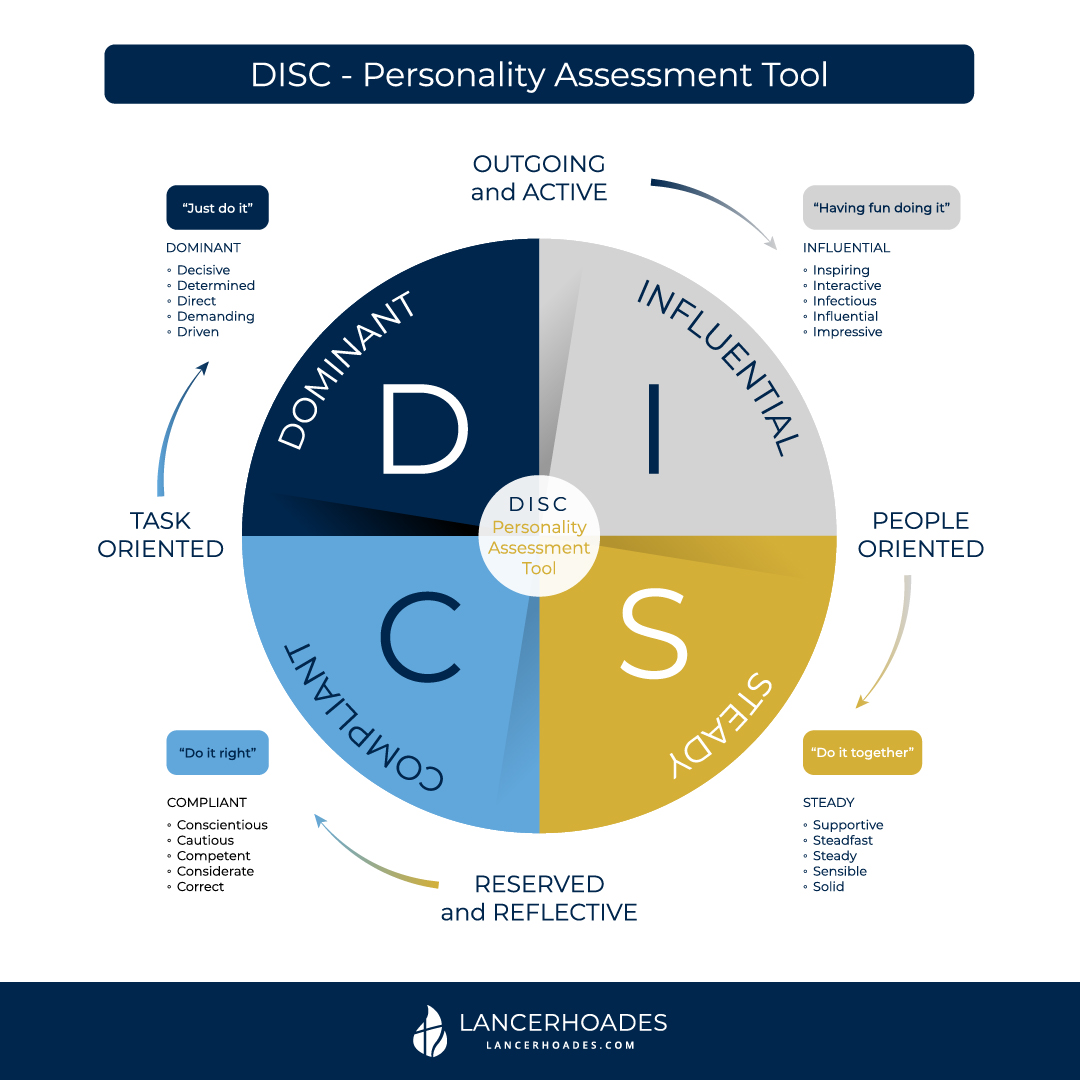
In my work with church and nonprofit teams, I have learned that people can look at the same task and notice very different things. Imagine we are planning a community event. One of us wants to make a decision and move. Another is thinking about how to get people excited. Someone asks whether the volunteers have enough time to prepare. Someone else wants to check the budget and the details. We all care about the event, but we are paying attention to different parts of the work.
DISC has given me a simple language for talking about those differences. If you have never taken a DISC assessment, I want to explain what it is, how it developed, and why I have found it helpful.
What Is a DISC Assessment?
When I introduce DISC to someone new, I describe it as a questionnaire about the ways we tend to respond to people and situations. You choose answers that sound most like you, and the questionnaire turns those choices into a picture of your behavioral preferences. I use that picture to begin a conversation. I do not expect it to tell me everything about a person.
DISC refers to four broad styles. Here is how I explain the letters:
- D — Dominance: A preference for taking action, facing challenges, and moving toward results. Someone leaning toward D might ask, “What is the decision?”
- I — Influence: A preference for connecting with people, sharing ideas, and building enthusiasm. Someone leaning toward I might ask, “How do we bring others along?”
- S — Steadiness: A preference for cooperation, consistency, and a dependable pace. Someone leaning toward S might ask, “How will this affect the team?”
- C — Conscientiousness: A preference for accuracy, quality, and careful thought. Someone leaning toward C might ask, “Have we checked the details?”
I can recognize parts of myself in more than one style, and I expect most people can too. I also know that the setting and the pressure we are under can affect how we respond. The letters help me ask better questions about my habits and the habits of my teammates. They are never a box I want to put someone in.
Where Did DISC Come From?
I find it helpful to separate the original idea behind DISC from the assessments people take today. In 1928, psychologist William Moulton Marston published Emotions of Normal People. He proposed four patterns of emotional and behavioral response that he called Dominance, Inducement, Submission, and Compliance. Those original names differ from the labels many assessments now use. Marston described a theory of behavior; he did not create a DISC questionnaire. The history in the Everything DiSC manual makes that distinction clear.
The move from an idea to an assessment came later. In the 1940s and 1950s, industrial psychologist Walter V. Clarke developed an adjective checklist for personnel selection. People marked words they thought described them, and Clarke saw patterns that resembled Marston’s model. His work helped open the door to later DISC questionnaires.
In the 1970s, John Geier developed the Personal Profile System, drawing on an assessment that had grown out of Clarke’s work. Publishers have since revised their questions and reports, and newer versions present the styles in different ways. The published history of DiSC traces that path from Marston through Clarke and Geier. When I see two tools using the letters DISC, I remember that they may ask different questions and produce different reports.
For me, this history is a reason to be both interested and careful. The idea that our patterns can help us understand one another has endured. The quality of a particular assessment still depends on its own questions and supporting research. I would not assume that a long history for the model proves every DISC questionnaire is accurate.
Why Would I Take One?
I have used DISC with teaching staff and volunteers in our organization. I have found it useful because it gives us a reason to pause and talk about the habits we can miss while we are busy serving others. Maybe I push for a decision because I care about momentum. Maybe a teammate wants everyone heard before we move on. Naming those preferences helps us explain what we need and notice when another approach might serve the team better.
Think back to the community event. If I am focused on results, I may need to slow down and hear why someone wants to review the details. If I am checking every detail, I may need to appreciate why someone else has already started inviting volunteers. I cannot learn those lessons from four letters alone, but the assessment can open a conversation I might otherwise avoid.
That is the practical value of DISC for me: it invites curiosity. Instead of assuming a teammate is slow, impatient, overly social, or too cautious, I can ask what they see that I might be missing. I wrote more about how we have used DISC with our staff and volunteers in DISC Personality Assessments and Their Impact on Our Organization.
How I Use the Results with Care
When I read a DISC report, I treat it as a prompt to reflect. I do not see it as a verdict about someone’s abilities, character, calling, or spiritual maturity. A person who prefers steadiness can lead a hard change. A person who values accuracy can also be warm and creative. I have to leave room for the whole person, because no letter tells the whole story and no style is better than another.
That matters most when a decision affects someone else. I would never want a DISC result to decide a hire, a ministry role, or a person’s potential by itself. I also want to hear about skills, experience, values, and the situation someone is facing. When I talk through a report with someone, the question I want to ask is, “Does this sound like you? When does it fit, and when does it not?”
Take a First Step
If you are curious, I invite you to try the DISC Style Questionnaire on this site. I want to be clear about what it is: an original, DISC-inspired developmental pilot that has not yet been validated as a psychological assessment. I use its report as a conversation starter and compare it with what I know from real life.
As you read your results, ask yourself where they describe the way you work with others and where they miss something important. Then ask someone you trust what they notice. I hope you come away with more than a label. I hope you find one useful question to ask about yourself and make more room for the strengths of the people serving beside you.
Browse all DISC articles for more background and practical reflections.